Sister? Act!
In South Tyrol, three sisters run a hotel that flatly refuses to be one: no buffet, no stars on the letterhead, but a mum who stacks the champagne and a dog called Lotte who keeps an eye on everything. On homecomings, handwriting and a Russian whose characters never arrive anywhere.
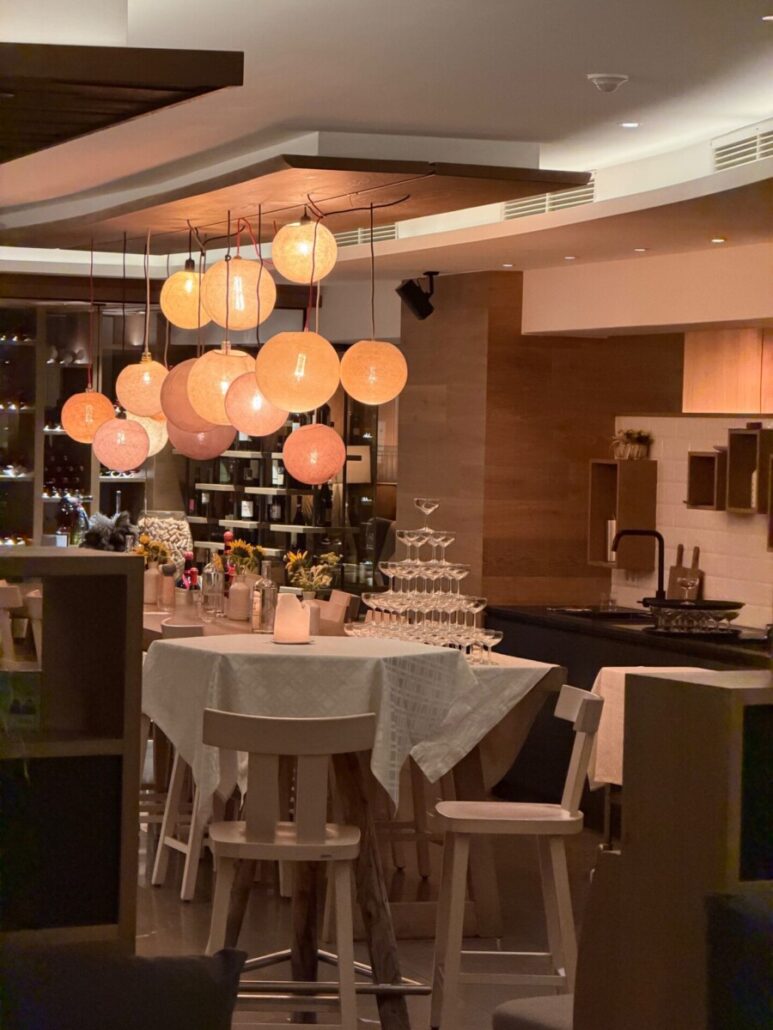
A champagne pyramid is physics with an audience. At the top stands a single glass, each tier below holds more, and whoever pours needs a steady hand and a certain faith that whatever overflows at the top will make it to the bottom. Tonight Gerti is pouring. She helped build this house, and she pours with the serene calm of a woman who has survived every species of guest in this dining room. The light catches in the glass, the room falls completely silent for a moment, then glasses are raised, and from there on the evening is beyond saving. In the best possible sense.
I confess that, at that very moment, of all people a Russian came to mind. Anton Chekhov, physician, playwright and world champion of elegant standstill, wrote a play called „Three Sisters“. It premiered in Moscow in 1901 and has been a staple of every self-respecting stage ever since. The plot is quickly told, because there essentially isn’t one: Olga, Masha and Irina are stuck in a provincial Russian backwater, dream of the big city for four acts, sigh „To Moscow!“ and don’t budge an inch. By the end everyone is a little older and exactly where they started. Great theatre, lousy travel planning.
Homecoming to Hotel Petrus
In Reischach, a village above Bruneck in South Tyrol’s Puster Valley, there are also three sisters. Their names are Brigitte, Christina and Daniela Aichner, and they have simply turned Chekhov on his head. Christina worked in New York and Nice, Daniela at agencies in Innsbruck and Munich, and Brigitte added hotel management school on top of her school-leaving exams. So all three of them could have had their Moscow. Instead they came home one after the other, to where the Kronplatz rises behind the house and the valley opens up in front, and now run Hotel Petrus together with their parents Gerti and Hans. Because „Everyone comes back at some point, it’s a South Tyrol thing,“ says Daniela, the youngest. And she says it without the slightest sigh, without any sense of obligation, but straight from the heart.
Back, in this case, means almost to the farm gate. Their father Hans grew up right next door, at the Oberwieserhof, the eldest of nine siblings. A hotel was the dream of his father Peter and, at some point, his own as well. The whole flock of siblings financed it, and Hans then bought out every single one of them, which with eight of them is quite an achievement. Around the time of the opening, the grandfather died; the house had no name yet. It was to be dedicated to him while also working in a bilingual region. Peter sounds different in Italian. Petrus stays Petrus everywhere, and conveniently, the saintly namesake with the keys also unlocks the village church as its patron.
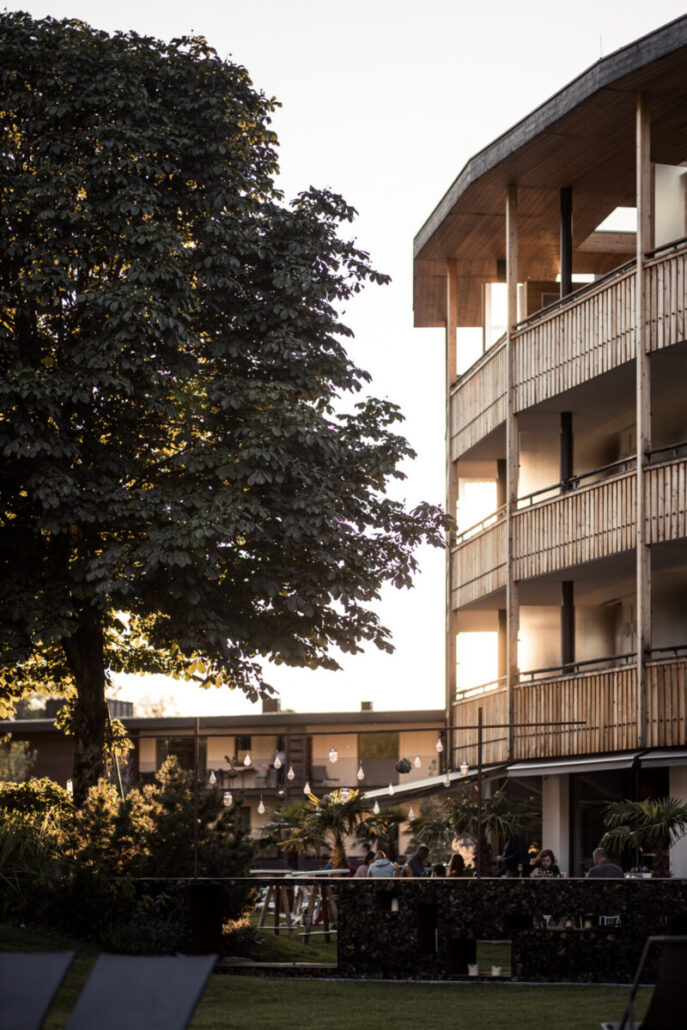
Today they are doubly glad of the choice, because the name holds up just as well in English. In winter, Daniela says, there are often guests from more than ten countries in the house; the Kronplatz draws half of Europe, after all. More than half of all guests have been here before. The building itself curves, nestling into the mountain at its back and turning its face to the sun, just as the architect once talked the young Hans into it out on the meadow. It has been remodelled many times since, on a grand scale in 2015 and in the restaurant in 2024. It has never been torn down and rebuilt. The house has grown like a tree, ring by ring. And so have the sisters.
Who does what here
The division of labour among the three is quickly explained. Christina is the boss of everything; she manages the staff and is known in the house as the décor queen, from whom no crooked twig escapes. Brigitte coordinates kitchen and service, looks after the cellar as sommelière and designs half the house on the side; the wellness and loft suites are hers. Her guiding principle is that nothing should look like a hotel. The open kitchen in the restaurant is therefore something you could just as easily put in at home, provided your home has a rather generous living room.
Daniela is in charge of communications and introduces herself with a laugh: „Everything you read, all the mistakes, they’re mine.“ They tried agencies, and it went wrong every time. „We have a problem. We have too many ideas of our own.“ So they write it themselves, design it themselves, make the pottery themselves. The weekly programme gets a flower added before it is handed out, and the in-house magazine lies printed in your room, because your phone ought to be on holiday too. It isn’t always perfect. Nor is it meant to be. „Maybe this imperfection is exactly what makes us who we are,“ she says. And yes, I know plenty of hotels that have „handcrafted“ printed in their mission statement. Here, by contrast, you can actually see the hand. On every slip of paper, on every plate, in every corner.
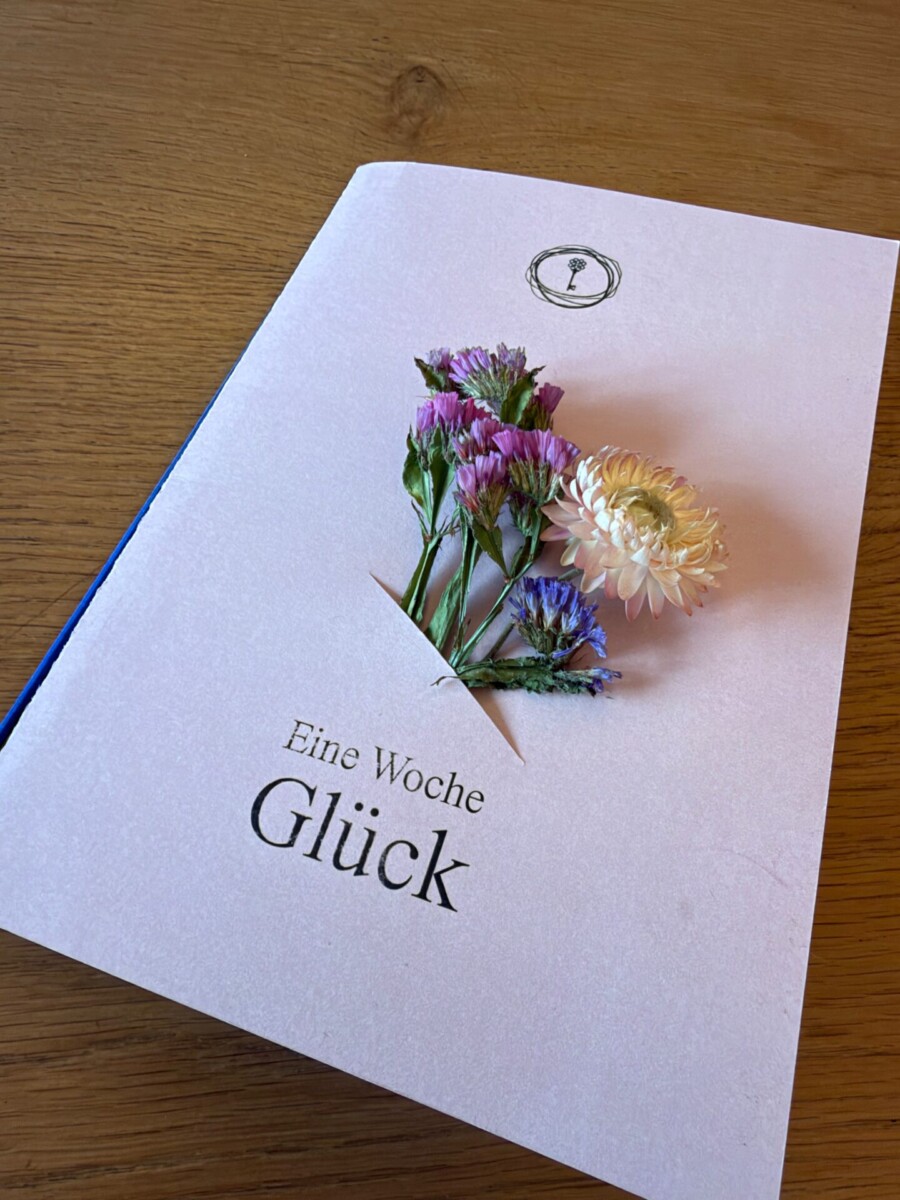
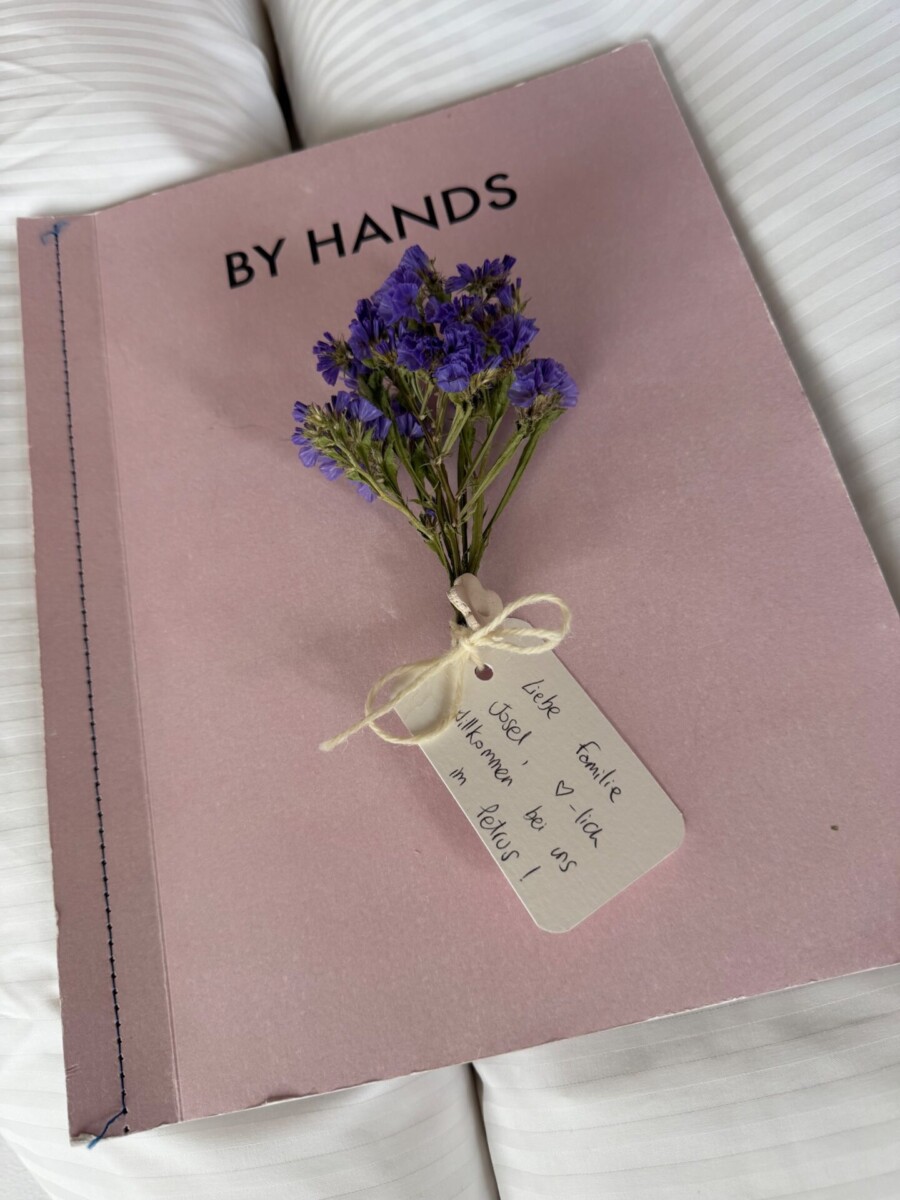
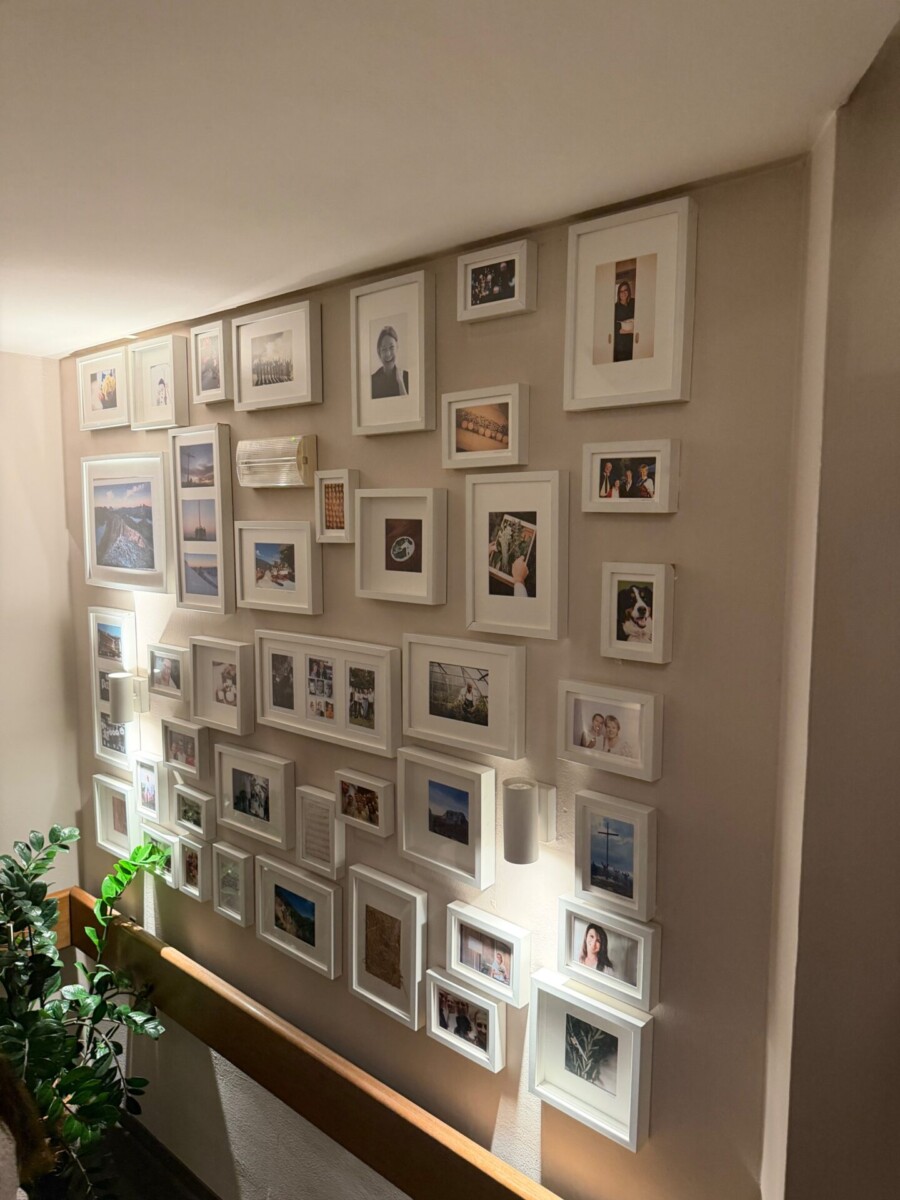
Officially, Petrus has four stars superior; the switch to five is under way, because international booking platforms simply sort by them. In the house itself you’ll be hard pressed to find the stars. „I hide my stars everywhere,“ says Daniela Aichner. The South Tyrolean arms race, in which somebody always has the longer pool, is one the three sit out. „Bigger, faster, better. Where exactly do we want to go?“ A pool can be photographed, service has to be experienced, and that, of course, isn’t „instagrammable“. As a business model that is considerably braver than it sounds, because influencer marketing won’t help here; it’s all about word of mouth. But that appears to work splendidly, which is hardly surprising. Anyone who has once been lucky enough to spend time here wants to come back as soon as possible.
„Bigger, faster, better. Where exactly do we want to go?“
Daniela Aichner
The buffet comes to the guest
All of this can be explained beautifully. You only really grasp it at breakfast. The buffet, that combat zone of sliders and thermal underwear, no longer exists here, and out of pure defiance at that. During the pandemic, buffets were allowed in Italy, but only with disposable gloves for guests. By then the Aichners had spent years clearing plastic out of the house and the business, and wouldn’t dream of it. „If we can’t bring the guest to the buffet, why don’t we bring the buffet to the guest?“ Since then, breakfast has arrived at the table on a long wooden board. The sweet things sit in the middle, because Germans and Italians start breakfast from opposite ends, and the bread is presented separately, because people want to see their bread before they take it.
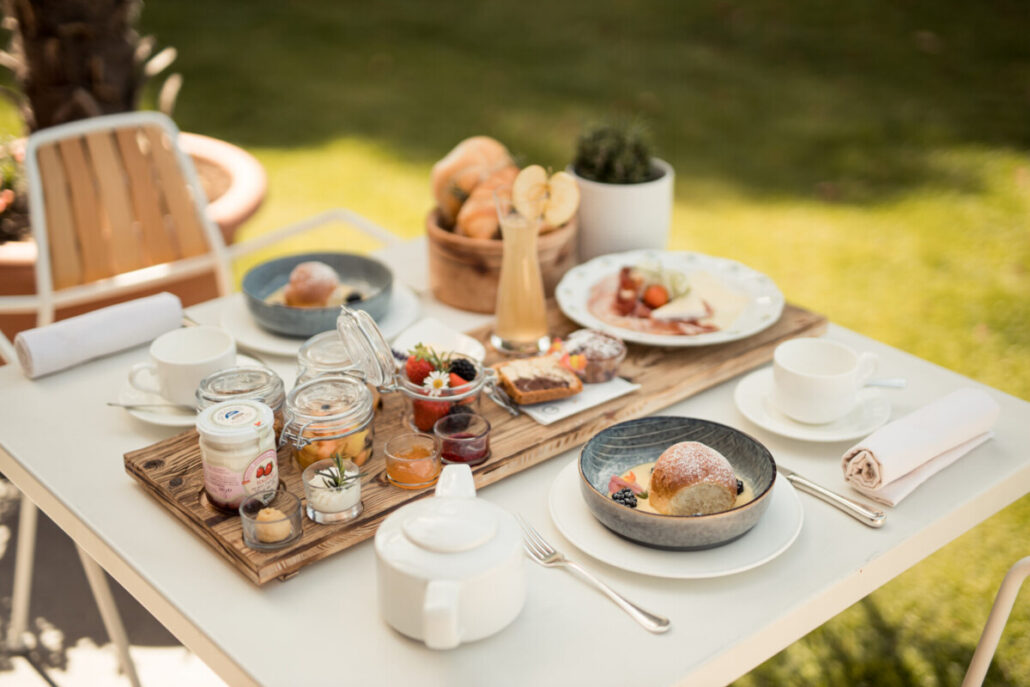
What that does to a morning becomes clear after ten minutes. You stay seated. Nobody has to trudge to the buffet every six minutes, plate in hand, to queue behind a stranger for the scrambled eggs. Instead you look outside, where the day is slowly coming over the mountain, you talk, you let them top you up. And at some point, between the second coffee and the third jam, you find yourself in conversation with the next table without knowing who started it. The time that elsewhere gets lost on the way to the cheese platter is simply lying around on the table here. All you have to do is pick it up and make something of it.
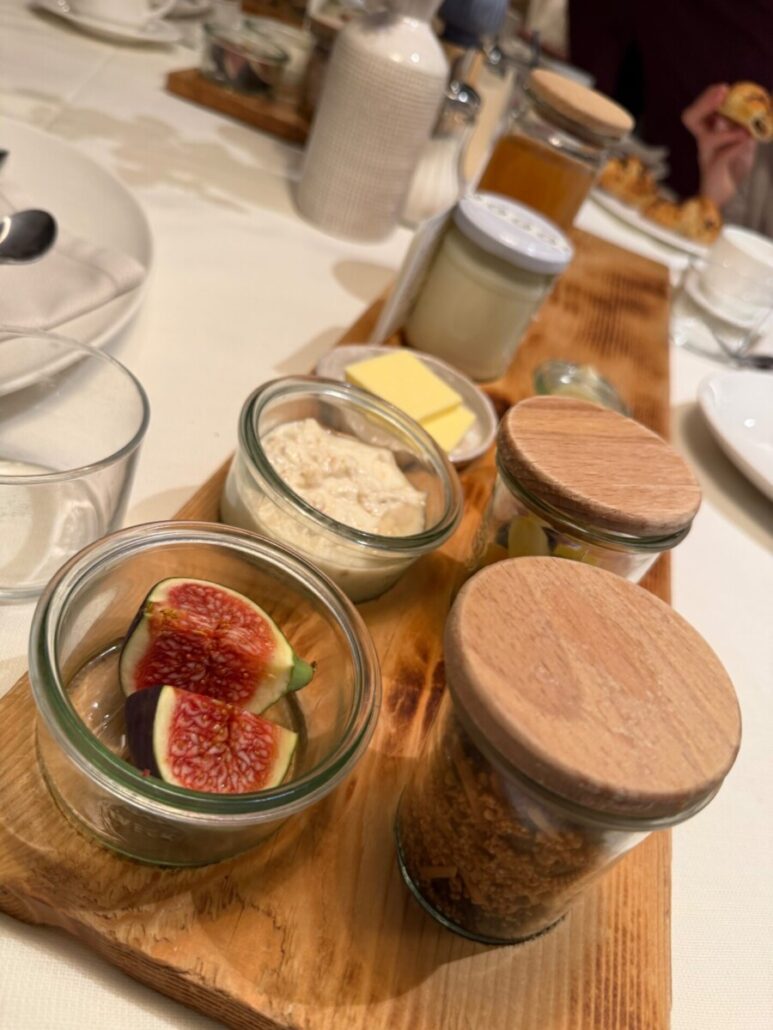
The service does the rest. Before the restaurant was remodelled, the sisters asked their long-standing staff whether they wanted the buffet back. Every one of them said no. „Suddenly every member of staff became a host,“ says Daniela Aichner, and she is understating it. Every waiter here is host and entertainer rolled into one; he brings the jam and a bit of banter with it, and by day two he knows who takes their coffee how, who needs which wine glass in the evening and who was up which summit yesterday. It’s more contagious than any cold. By the end of the week, complete strangers at different tables are wishing each other a good day and asking in the evening how the hike went. Anyone who has ever watched twenty couples in a hotel restaurant sitting in mutually agreed silence knows what that means.
There is no escaping this friendliness, by the way; I tried. Somewhere you run into one of the three sisters, who wants to know how the walk was. You creep towards the bar, and Gerti has already spotted you. You come back late, and Hans is sitting at reception with one more story. „You can’t sneak in here,“ says Daniela Aichner, and it isn’t a threat but a statement of fact. Wherever the family can’t get to, Lotte takes over. The house’s Bernese mountain dog makes her rounds with the composure of a hotel manager, keeps track of every guest, big and small, and reliably turns up wherever a hand happens to be free. A stroke, a quick look, on to the next table.
A border crossing in four plates
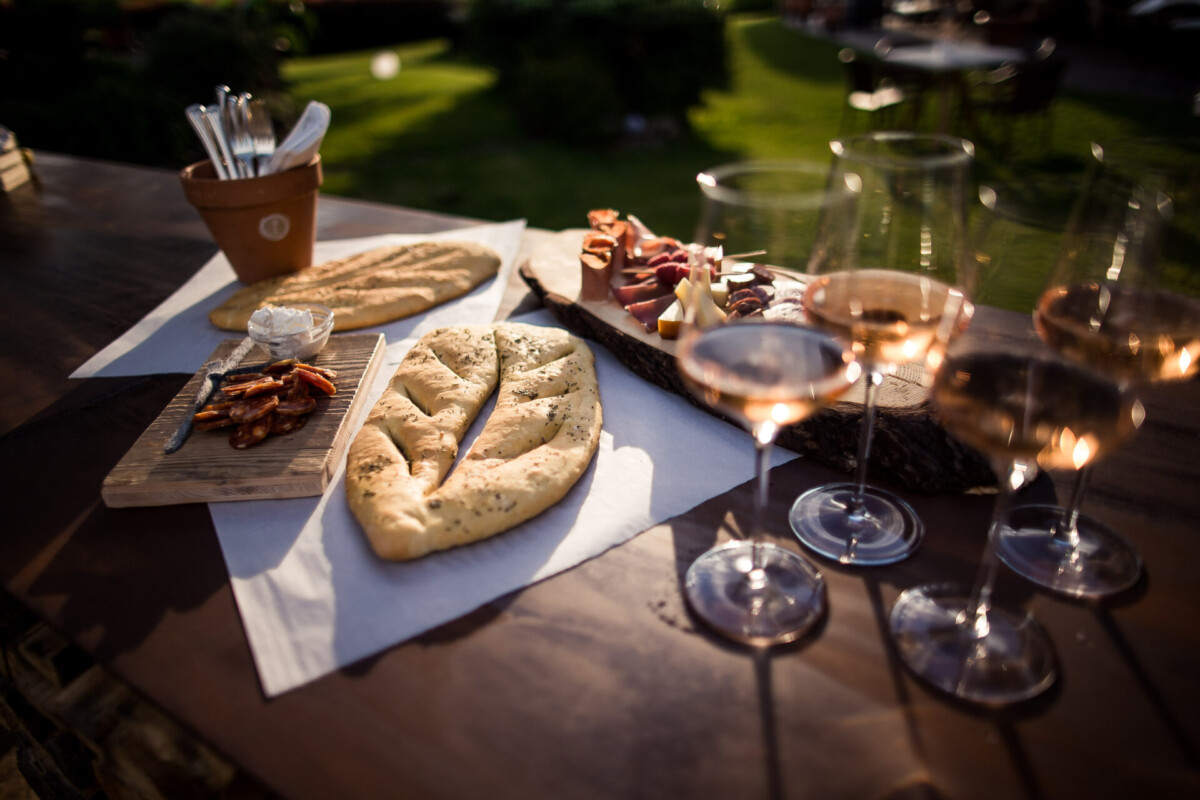
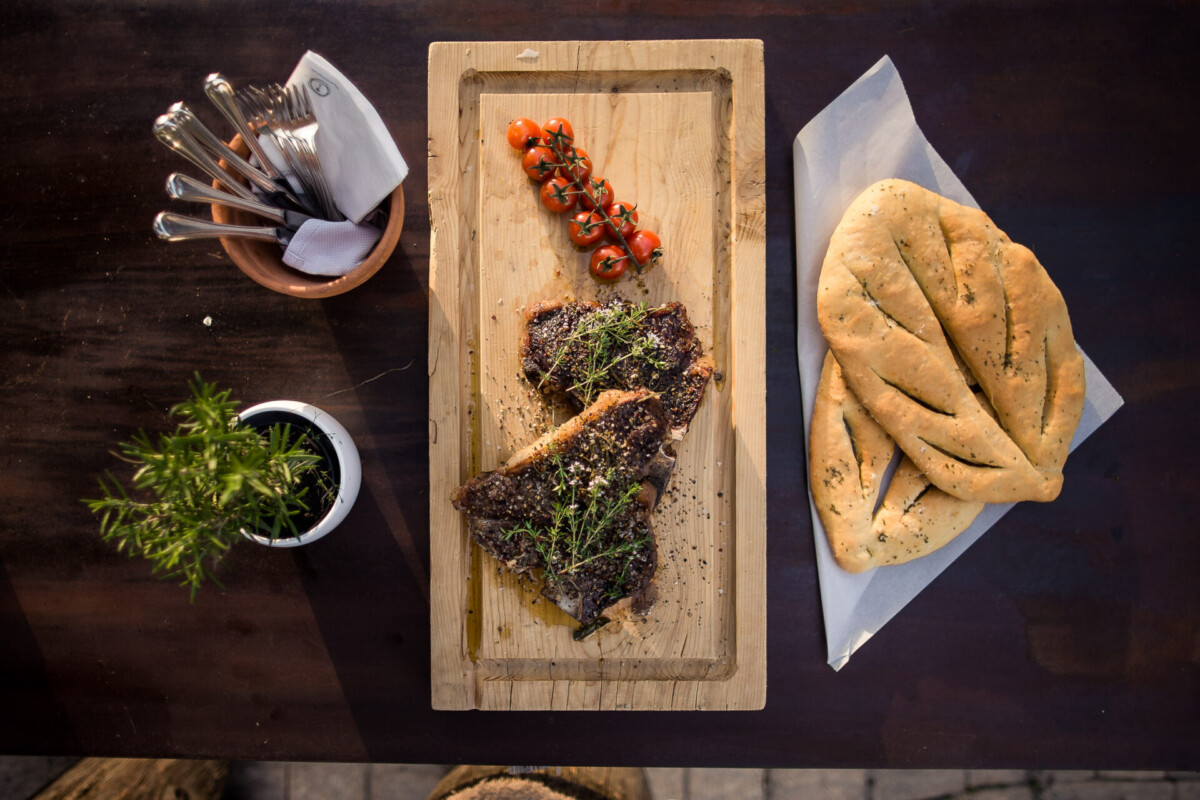
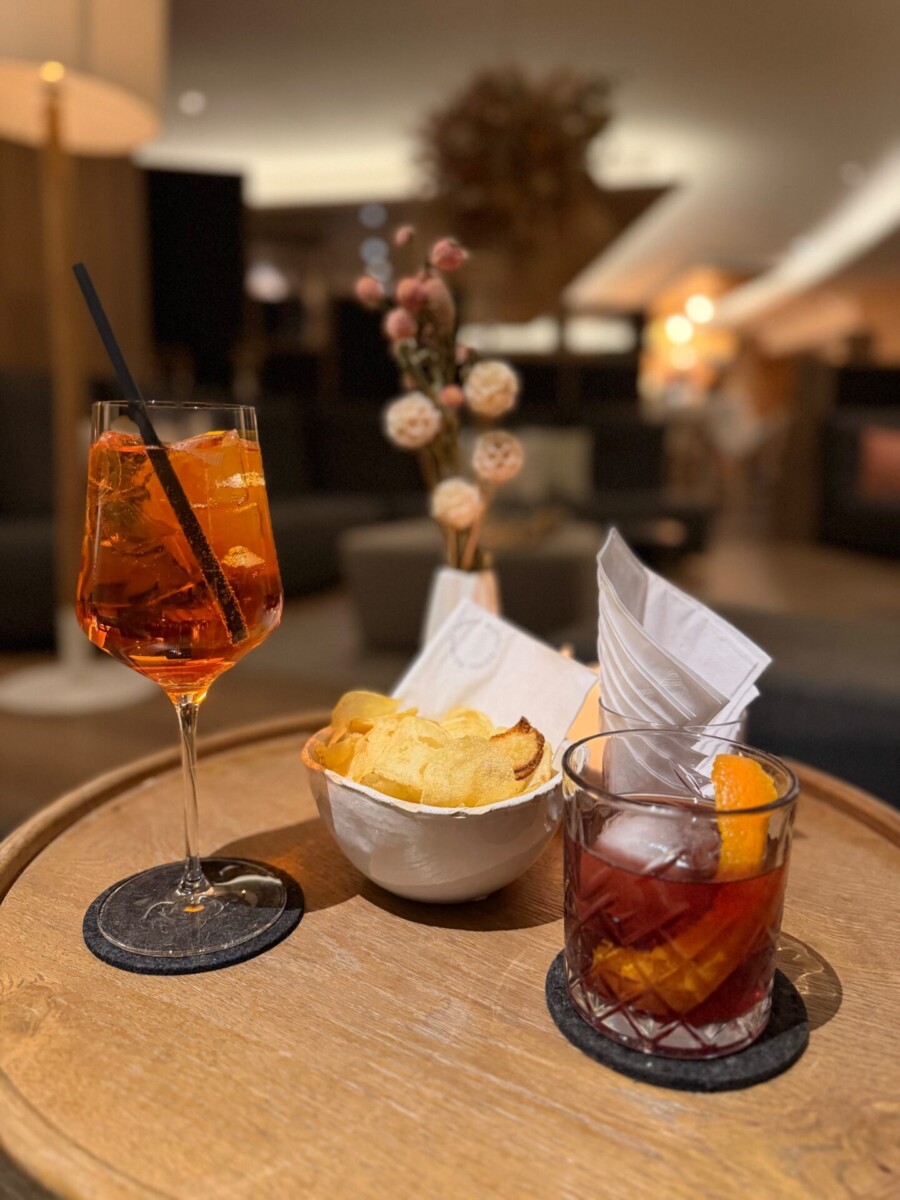
In the evening, things continue in the same spirit. The Sunday menu during our stay featured rosemary focaccia, octopus salad with burnt pepper cream, beef consommé with pancake strips and a risotto with blueberries, Gorgonzola and pancetta. That is a border crossing in four plates, without any queue at the Brenner Pass, and it comes off: the consommé as clear as the mountain air up here, the risotto sweet, salty and just a touch daring. Much of what ends up on the plate Hans has grown on his own vegetable farm. The wine list explains Kerner, Vernatsch and Lagrein while it’s at it, vineyard area included; the house Lagrein „Petrus“ from the H. Lentsch winery was 32 euros a bottle. Next to another Lagrein sits a little heart, so somebody has an opinion. For the grander opera there is the Kaminstube, which the house lists with 16 out of 20 points in the Gault Millau. Daniela Aichner has a South Tyrolean formula for all of it: „Maybe there isn’t that much, but what you get is good.“
„Maybe there isn’t that much, but what you get is good.“
Daniela Aichner
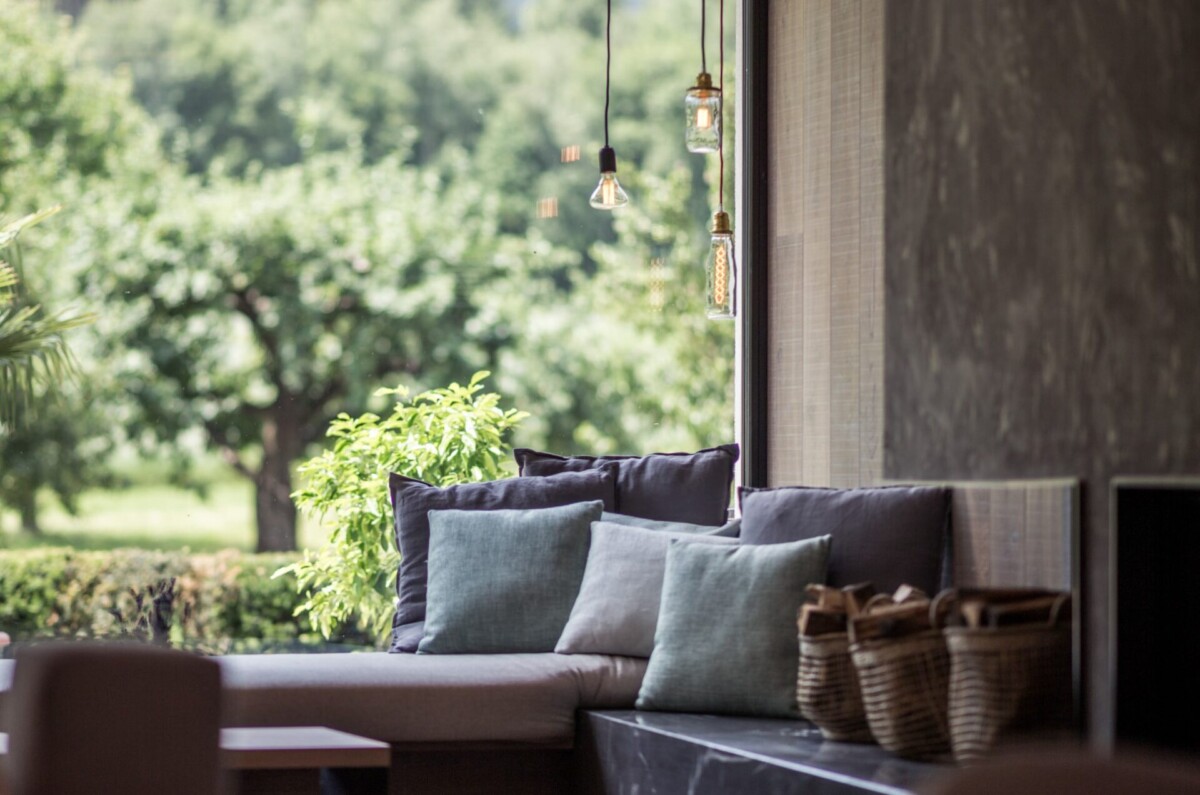
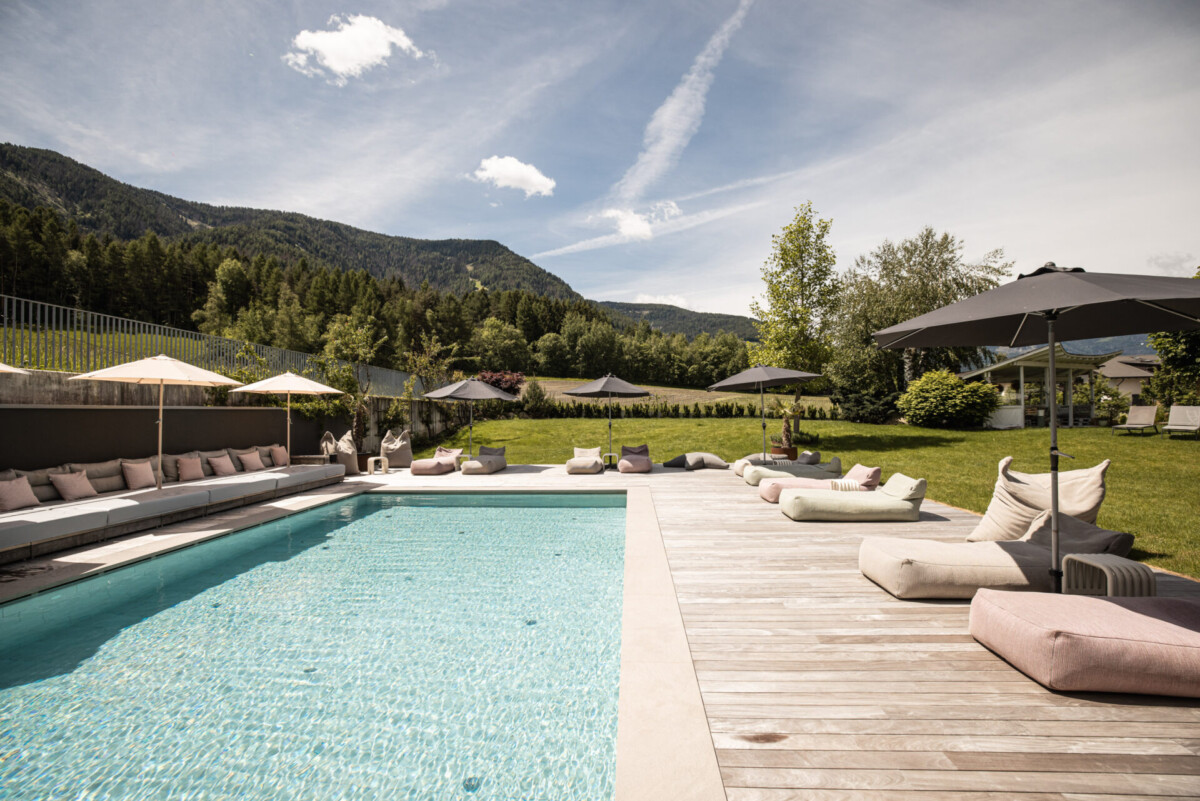
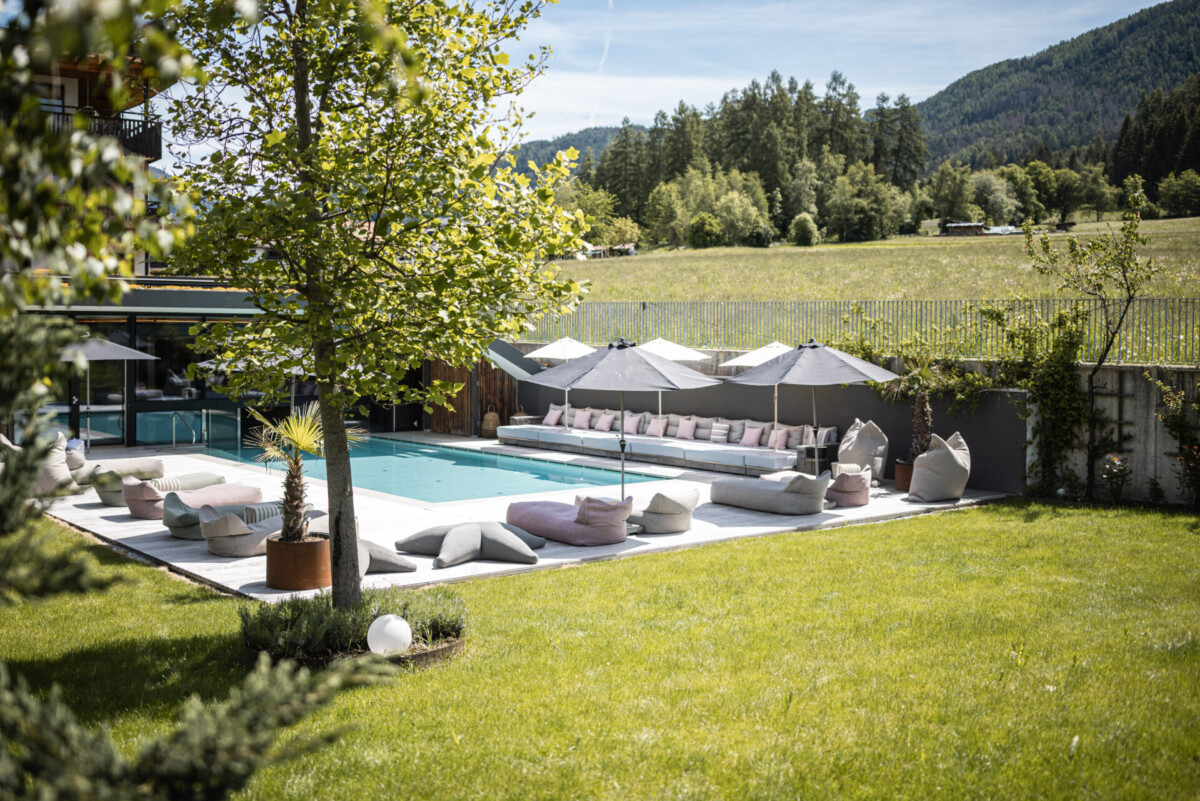
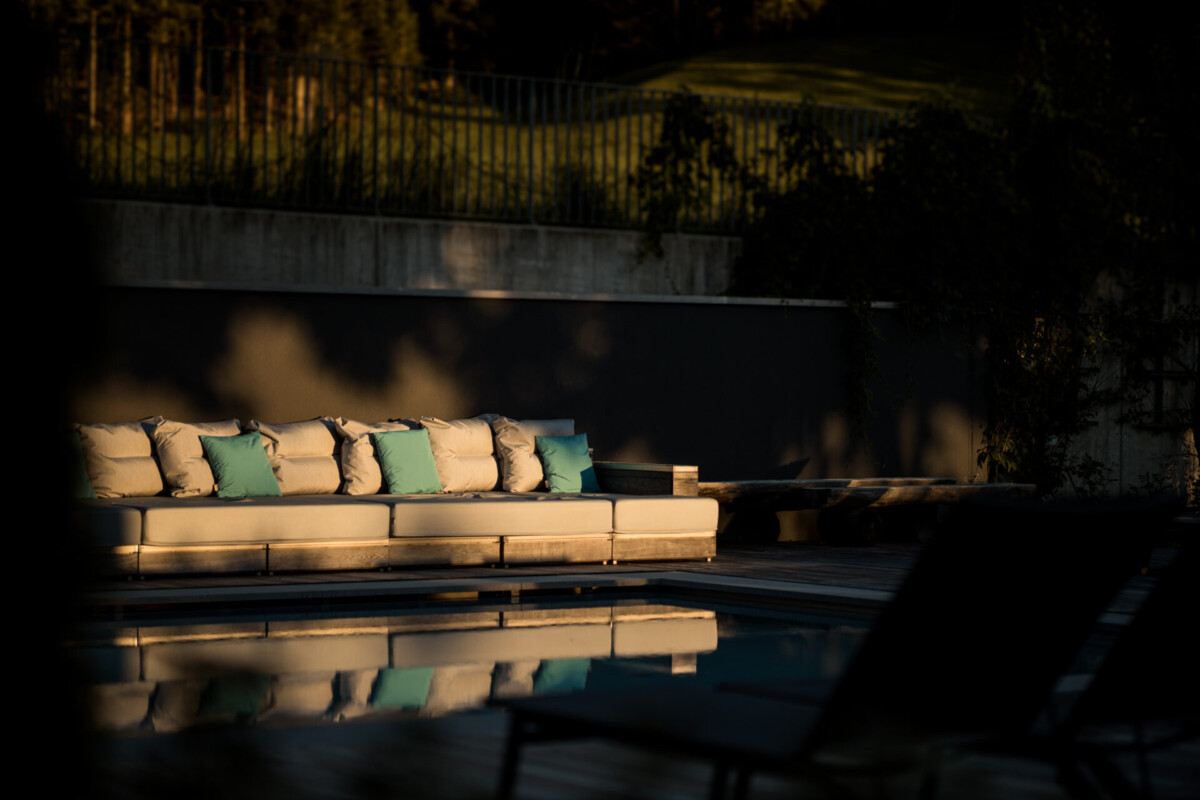
And yes, you can swim too. The 25-metre pool is half indoors and half outdoors; you dive under the glass front and come up in the open air, where the warm water steams into the cold air and the mountain looks on. Beyond it await saunas, relaxation rooms, plenty of Swiss stone pine and a garden that glows in the evening. All of it is lovely and generous, and still not the reason you come back. South Tyrol has beautiful pools on every corner. People come back here for the remarkable people behind the name Petrus.
What closeness costs
None of this comes free. A five-day week for around 50 staff, rotas built around football practice and ice hockey matches, a breakfast that is carried in rather than set out: that takes people, and people cost money. Prices have risen accordingly, as the hostess herself says. And anyone who wants to stay invisible on holiday has simply come through the wrong door. The welcome is meant to feel „like your best friend’s parents are just checking in“. Warm, in other words, and on the house’s terms.
I’ve written about many hotels here, big ones, expensive ones, award-winning ones, and in most of them I was a guest with a room number. At Petrus you don’t walk into just any hotel. You step into the living space of a family who grew up here and grew with it, who work, argue, laugh and make pottery here, and who embrace you with a hospitality you simply don’t encounter elsewhere. You are taken in without being asked, and after two days you realise you’re behaving as if you were at home, only in a better mood.
No fifth act
Three daughters taking over a house where their parents still stand every day: Chekhov would have easily squeezed a fifth act out of that. In Reischach, the drama is cancelled. Hans has stepped back; he tends his vegetable farm, runs the ski hire in winter and sits at reception in the evenings. Gerti looks after housekeeping and laundry, now and then the service, and sometimes a little more than is good for her. „We don’t send anyone away,“ says Daniela Aichner. That is why there is never revolution at Petrus, only evolution, in small steps and with respect for what was already there. And in the end, the parents are the ones standing there, proudly telling everyone what new things their daughters have come up with this time.
You could dismiss this as family romanticism. Or you could watch Gerti once more as she pours at the top until it reaches the bottom, glass by glass, tier by tier, until even the last guest has had their share. Olga, Masha and Irina haven’t made it to Moscow in more than a hundred years. Brigitte, Christina and Daniela wouldn’t know what to do there, because their calling lies here, at Petrus, at the foot of the Kronplatz.
Hotel Petrus at a glance
| Address | Reinthalstraße 11, 39031 Reischach/Bruneck, South Tyrol, Italy |
|---|---|
| Category | Four stars superior, 32 rooms and 18 suites |
| Hosts | Brigitte, Christina and Daniela Aichner with their parents Gerti and Hans |
| Cuisine | No buffet; breakfast and dinner menu are served. Kaminstube restaurant with 16 out of 20 points in the Gault&Millau (according to the hotel) |
| Closed | November and after Easter |
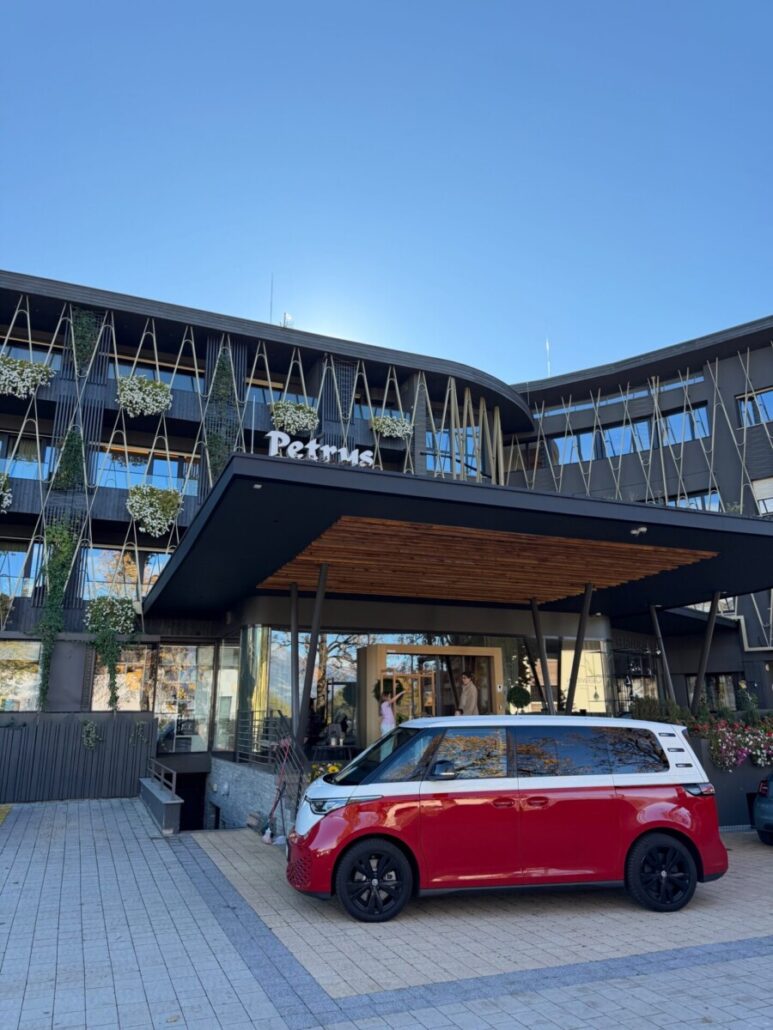
| Getting there | The WIENER team arrived in the VW ID. Buzz |
| Web | hotelpetrus.com |
More South Tyrol in WIENER: the quiet Gsies Valley a few kilometres away, a family-run hotel that puts character before gloss, and a South Tyrolean family hotel in Val Gardena.